
Why Is My Dog Not Learning From No?
Published
Updated
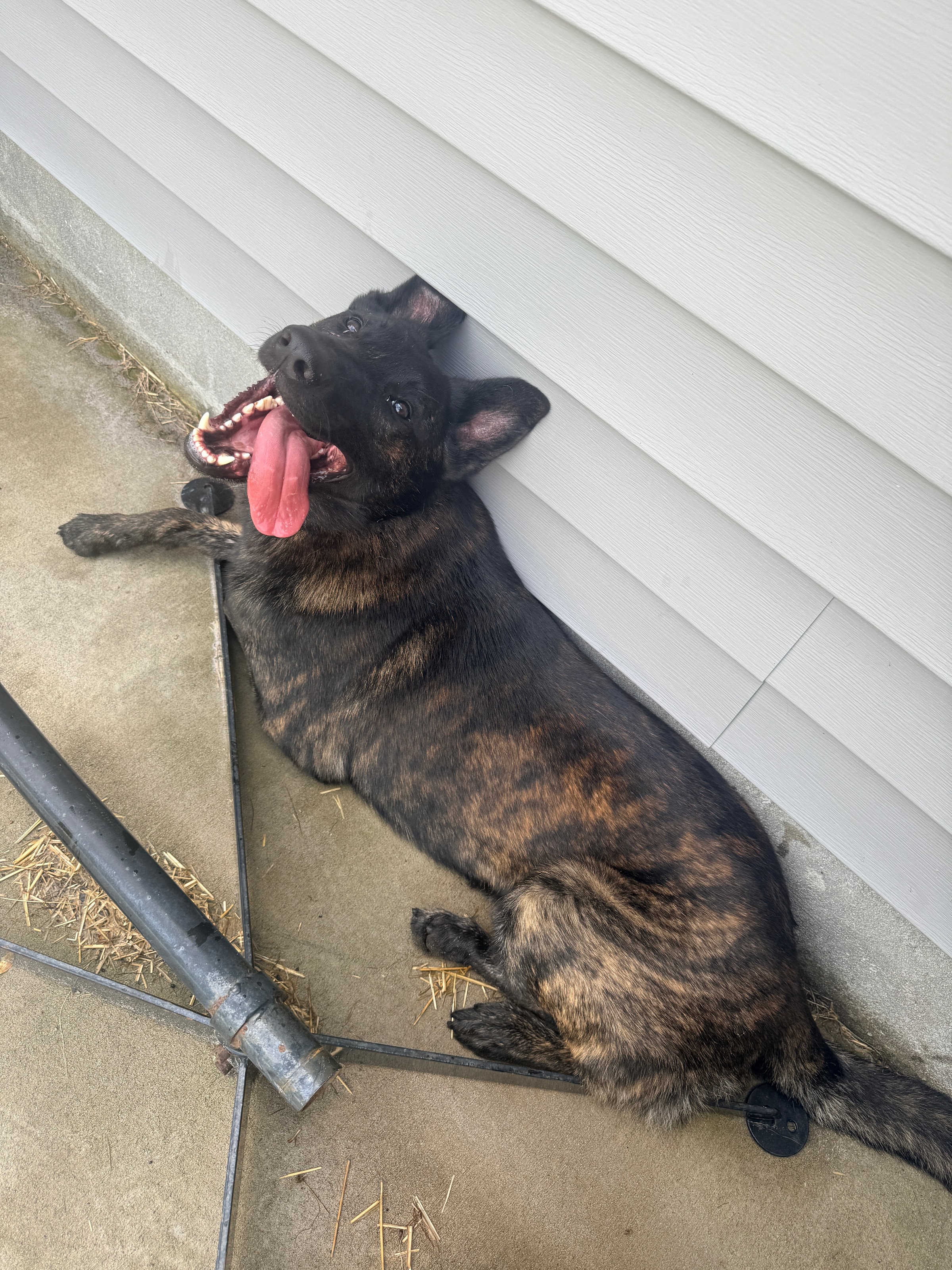
A lot of owners ask some version of this, usually after weeks or months of repeating no. The short answer is this. Your dog is always learning from what happens next, but they may not be learning the lesson you think you are teaching. If behavior keeps happening, your dog is not experiencing your response as meaningful enough to reduce that behavior, or they do not clearly understand what you do want instead.
That is why this gets so frustrating. You can be trying hard, correcting often, and still accidentally reinforcing the exact thing you want to stop.
Why does saying no so often fail?
Saying no fails when it does not actually change the behavior. Dogs learn from outcomes, not from our intentions.
This is where owners get stuck. You mean, "that behavior should stop." Your dog experiences something very different. Maybe your dog jumps on you, you push them off, and tell them no. To you, that was a correction. To the dog, your hands came out, you got animated, and the interaction got more exciting. If the jumping continues or even gets stronger, then your dog did not experience that moment as punishment. They experienced it as reinforcement.
That is the part I want owners to really understand. A correction is not defined by your mood, your volume, or your intention. It is defined by whether the behavior becomes less likely afterward.
What does my dog actually learn from consequences?
Your dog learns what works and what does not. Behavior that pays off repeats, and behavior that stops paying off fades.
That applies to both rewards and consequences. Reinforcement increases behavior. Punishment decreases behavior. Scientifically, those words are about what happens to behavior, not whether you were nice or mean. Positive means something was added. Negative means something was removed.
That matters because a lot of owners get hung up on the words and miss the practical part. If your dog wants your attention, then removing your attention can be meaningful. If your dog wants play, ending play can be meaningful. If your dog wants freedom, losing freedom can be meaningful. Those are all consequences.
Dogs are constantly experimenting. I talk about them like little scientists because that is what they are doing. They try a behavior, see what result it gets, and then decide whether it is worth trying again.
Does a correction have to be harsh to work?
No. It has to be meaningful, not forceful.
That distinction matters a lot. Meaningful does not mean angry, painful, or extreme. It means your dog actually cares about it enough for the behavior to decrease. For one dog, stepping into their space may be plenty. For another, that may mean absolutely nothing. For one dog, ending a game is a big deal. For another, the bigger consequence might be losing access to movement, space, or your interaction.
Good training is not about seeing how intense you can get. In fact, if you constantly feel like you need bigger and bigger corrections, something is probably off in your timing, your clarity, or your overall plan.
The goal is not stress for the sake of stress. The goal is clear information.
How do I know if I accidentally rewarded the bad behavior?
Watch what the behavior does next. If it stays the same or gets stronger, your response probably was not a real correction for your dog.
This is one of the simplest and most useful tests you can run at home. Do not judge your technique by what you hoped it would do. Judge it by what actually happened. If your dog keeps doing the behavior, they are telling you your response did not land the way you thought it did.
Here is a practical way to check yourself:
- Pick one behavior you want to change.
- Notice exactly what you do right after it happens.
- Ask, did that behavior become more likely or less likely after my response?
- If it did not decrease, stop calling that response a correction.
- Change the consequence, or go back and teach more clearly.
That little shift can save owners a lot of wasted time.
What kinds of consequences can work without getting rough?
Removing access to something the dog wants is often plenty. A lot of dogs learn very well through structure, guidance, and loss of opportunity.
That can look like ending play when the dog gets too mouthy. It can look like taking away freedom and putting the dog back on leash when they blow off what they know. It can look like pulling your hands away instead of engaging with a dog that jumps for attention. It can look like interrupting access to an exciting environment until the dog is calm enough to move forward.
That is one reason structure matters so much. If your dog has unlimited access to everything they want, it becomes harder to make consequences meaningful. If you want to go deeper on that piece, read Why Dogs Need Structure At Home.
And if you are not sure where your biggest training gap is right now, start by finding your training gap with the free quiz.
What if my dog knows the command but still ignores me?
Then you need to separate confusion from accountability. Do not correct what you have not taught.
This is where I see owners rush ahead. A dog does not truly know a behavior just because they did it in the kitchen three times for a treat. Before I hold a dog accountable, I want four things in place. The behavior has been taught, practiced, generalized, and proofed.
Generalized means the dog understands the command in different places and contexts. Proofed means the dog can do it with distance, duration, and distraction. Until you have done that work, it is not fair to assume disobedience.
A lot of behavior problems clear up when owners slow down and ask whether the dog actually understands the job. Commands should mean something, but they only mean something after the dog has really learned them.
Why does my dog listen inside but not outside?
Usually because the environment got harder and your reinforcement did not keep up.
Owners will tell me their dog is food motivated at home but not outside. Most of the time, that does not mean the dog hates food. It means the value of the environment just beat the value of what you brought. A piece of kibble in the kitchen may be enough there, but not around another dog, a squirrel, a new person, or a busy sidewalk.
The same principle applies beyond food. Reinforcement can be food, toys, praise, play, movement, sniffing, greeting someone, access to a new area, or freedom. Good training means figuring out what your individual dog values in that moment and using it strategically.
If your dog loses their mind the second the environment turns on, the answer usually is not to keep drilling in the same hard place. Lower the difficulty, rebuild success, and progress more gradually.
Should I reward more, correct more, or manage more?
Usually, you need all three in the right order.
I think of training as a balance between rewarding, managing, and consequences. Rewards build behavior. Management prevents your dog from rehearsing the wrong behavior while learning. Consequences reduce behavior that should stop. The best results come from balancing those three, not from obsessing over only one of them.
Management is especially important when your dog keeps practicing the problem. If your dog blows up on walks, it does not make sense to keep putting them in the exact setup where they fail over and over. If that sounds familiar, I break that down more in How To Stop Leash Reactivity Before It Escalates.
This is also why I tell owners not to repeat commands endlessly. If a command gets repeated with no follow through, the dog learns it is optional. Commands should be given clearly, and then you either get compliance, guide the dog, or adjust the setup.
How can I make training clearer for my dog right now?
Start by becoming more precise, not louder or tougher.
A few things matter a lot here. Timing matters because a fair consequence delivered too late can confuse a dog and create stress instead of learning. Clarity matters because if all your dog hears is no, no, no, but never gets shown the right answer, you create a dog that only knows how to be wrong. And consistency matters because dogs learn patterns fast, especially when we accidentally make the wrong pattern work.
I want owners to ask themselves a few simple questions during training:
- Did my dog actually understand what I asked?
- What happened immediately after the behavior?
- Did the behavior increase or decrease?
- Is my dog showing understanding, confusion, or stress?
- Could I get the same result with less stress and more clarity?
That last question is important. You should always be looking for the cleanest, fairest way to teach the lesson.
If you want help sorting out whether your dog has an understanding problem, an engagement problem, or an accountability problem, you can book a 1-on-1 consult.
What is the biggest mindset shift owners need here?
Stop asking, "Did I mean that as a correction?" Start asking, "What did my dog learn from it?"
That one distinction changes everything. It gets you out of emotion and into observation. It helps you stop arguing with your dog in circles. And it gives you a better way to evaluate training than simply picking a camp and following it blindly.
Your dog does not care about labels. Your dog cares about what works, what does not, and whether your communication is clear. When you start looking at behavior that way, no stops being a word you repeat and starts becoming part of a system your dog can actually understand.