
Why Does My Dog Go Crazy At The Door?
Published
Updated
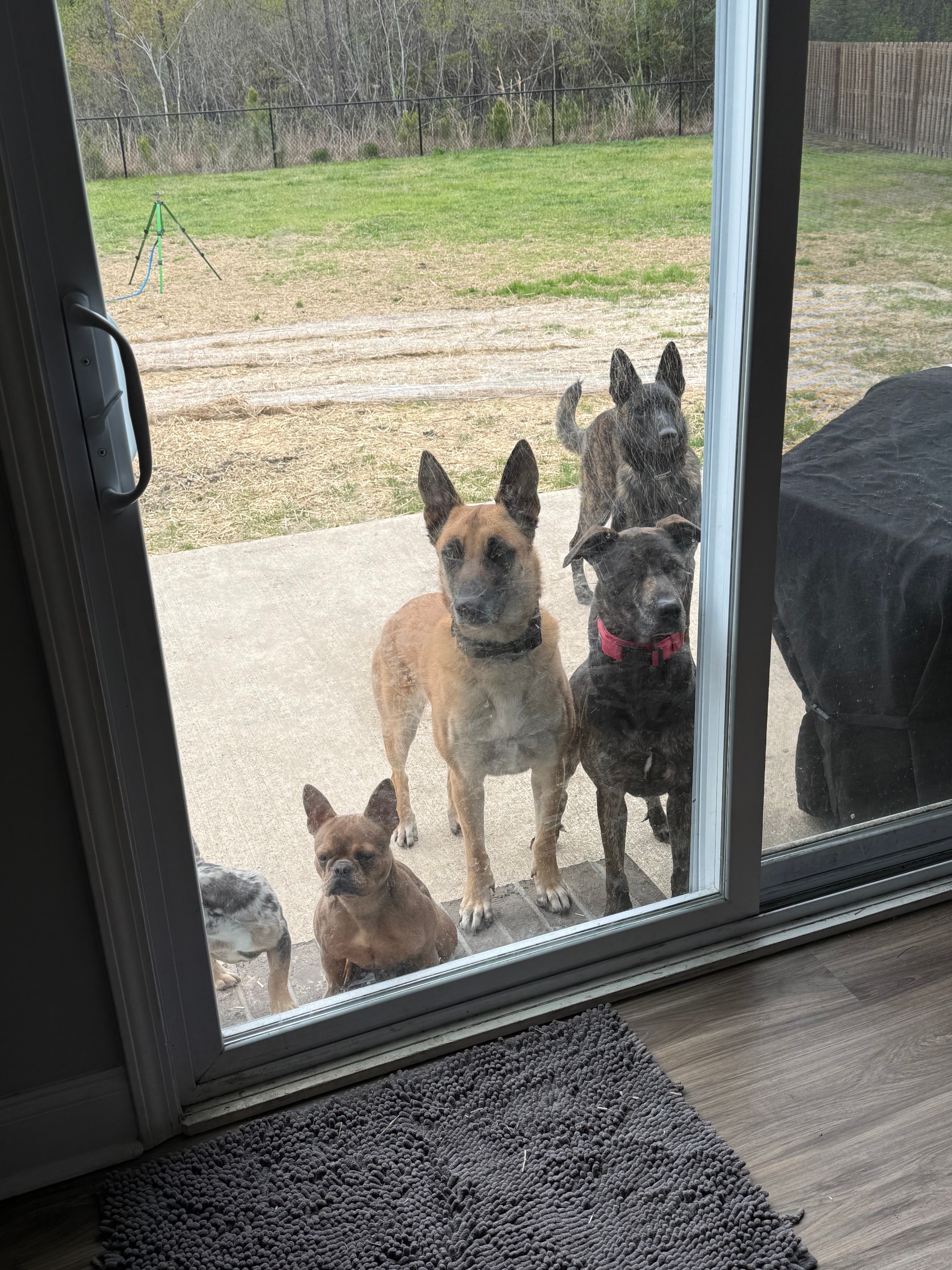
Your dog is usually not losing their mind at the door because they are being rude or stubborn. In most homes, it happens because the doorway predicts something exciting, the dog has practiced that reaction over and over, and nobody has clearly taught what to do instead. That makes this less of a greeting problem and more of an impulse control, structure, and leadership problem.
When a dog learns that the door means guests, deliveries, reunions, or instant attention, the chaos starts to make sense. Barking, rushing, jumping, and spinning all become part of a pattern that works. And dogs repeat what works.
Why is the front door such a big trigger for dogs?
The door combines anticipation, excitement, and a lack of structure. That is why even dogs who seem fine in other parts of the house can completely lose control there.
The front door predicts a high value event. Somebody is arriving. Somebody is leaving. A favorite person is coming home. A stranger is walking up the path. For a lot of dogs, that doorway is basically a scoreboard of everything interesting that happens all day. If the dog has been allowed to rush it, bark at it, or explode toward it enough times, that behavior stops being random and starts being expected.
This is also why owners often feel stuck. They are not dealing with one bad moment. They are dealing with a rehearsal history. Every time the dog sprints to the door and gets the thrill of the event, the pattern gets stronger.
Movement makes this worse. Dogs are naturally drawn to motion. Fast movement can raise arousal fast, especially around something the dog already finds exciting. If you rip a door open, hurry toward the entryway, or come in with big energy, you often make the whole picture harder. Slow things down, and you usually get more of your dog back.
Why does telling my dog no not fix it?
Because most owners are reacting to the explosion after it starts, instead of changing the pattern that causes it.
Yelling louder might interrupt the dog for a second. It can surprise them, break the moment, or startle them into pausing. But if nothing clear follows that pause, the dog learns that the noise does not really matter. Over time, it becomes background information.
The same thing happens when people try to block the dog with a leg, an arm, or their body. Sometimes that works once or twice. Then the dog learns to go around you, over you, or through you. Now you are not leading the situation, you are just part of the obstacle course.
Correcting after the dog already blasted across the room is usually too late. Once the dog has fully committed, you are trying to put the lava back in the volcano. That is why management matters so much here. If the dog can keep rehearsing the bad version, the bad version keeps getting stronger.
If you have been repeating yourself a lot and not seeing change, this is usually a sign that the real problem is not volume. It is clarity.
What should I teach instead of door chaos?
Teach a calm default behavior before you worry about the greeting.
My favorite option is place. A sit can help too, but place is especially useful because it gives the dog a defined job and keeps them from rushing the doorway. The reason it works so well is simple. A dog cannot be holding place and charging the door at the same time.
That matters more than people think. A lot of owners stay focused on what they want to stop. I would rather get crystal clear about what the dog should do instead. If the only thing your dog knows is that door excitement happens at the door, then that is the pattern they will keep choosing. If the dog learns that the sound of the doorbell means go to place, now we are building a different pattern.
This is one reason I talk so much about structure at home. If that piece is missing, a lot of behaviors get messy. I go deeper into that in Why Dogs Need Structure At Home.
How do I actually practice this without waiting for guests?
Start without real guests. You do not need an audience to teach the pattern.
Most owners make this too hard too early. They wait until someone is at the door, the dog is already over threshold, and then they try to train in the middle of the worst moment. Instead, build repetitions when nothing important is happening.
A simple practice sequence looks like this:
- Put your dog on leash, or send them to place.
- Open and close the door calmly.
- Mark and reward calm behavior.
- Repeat the same doorway motion several times.
- Add a trigger like knocking or a doorbell sound only after the dog understands the job.
- Reward the dog for staying calm, staying on place, or disengaging from the doorway.
- Release with calm energy, not excited energy.
That last part matters. If your release sounds like a party, do not be surprised when the dog acts like it is one. Use your voice and body language to communicate calmness.
You can also rehearse with fake setups. Knock on your own wall. Ring the bell. Open the door and talk to an imaginary person. It sounds silly, but your dog does not care whether the scenario is socially normal. The dog cares whether the trigger happened and whether they know what to do next.
If you are not sure whether your bigger issue is structure, engagement, timing, or follow through, you can start by finding your training gap with the free quiz.
Should I let my dog greet people after they calm down?
Yes, but only after calm behavior happens first.
A lot of owners accidentally reward the wrong part of the sequence. The dog screams, rushes, jumps, and then finally gets access to the guest. From the dog’s perspective, the chaos worked. If you want calm behavior, calm behavior has to be what opens the door to the reward.
That may mean the greeting happens later than you want. Good. That is often exactly what needs to happen.
If your guest is not staying long enough for your dog to settle, then skip the greeting. That is not harsh. It is just clear. Your dog does not need to meet every person who comes through the door, especially if the price of that meeting is another full rehearsal of the problem.
And if you use a crate for management, the same rule applies. If the dog is whining, spinning, and trying to launch out of the crate, do not release them into the thing they are losing control over. Wait for the calm moment first. If crate skills themselves are part of the struggle, this article may help, Why Your Dog Whines In The Crate And How To Fix It.
What if I do not have time to train every doorway moment?
Then manage more, not less.
This is where a lot of people sabotage themselves without meaning to. They are in a rush, somebody is coming by for two minutes, groceries are in hand, or they just want to get inside after work. So they let the dog practice the full chaotic version because training feels inconvenient right then.
I get it. But from the dog’s perspective, those rushed reps still count.
If you know you cannot actively work the dog through the situation, use structure that prevents rehearsal. Put the dog in a crate. Put them on place. Use a leash inside. Tether them safely so they cannot rush the doorway. Management is not failure. Management is how you stop strengthening the exact behavior you are trying to get rid of.
Freedom has to match training level. If reliability drops, freedom should drop too.
Why does my dog act calm with me sometimes, then explode with visitors?
Because inconsistency destroys clarity.
If your dog is allowed to crawl all over you on the couch, put paws on your lap, crowd your space, and seek attention however they want, then it gets confusing when you suddenly decide body contact is rude at the door. Dogs are much more black and white about this than people are.
That does not mean affection is bad. It means the rules need to make sense. If a behavior is okay sometimes and not okay other times, you need to be realistic about how clearly your dog can sort that out.
The same thing happens when commands become optional. If you say place, place, place, place and eventually give up, the dog learns that the command is a suggestion. If the dog knows the command, follow through matters. Commands mean something when they are clear, consistent, and supported.
What is the fastest way to start fixing this this week?
Run calm doorway repetitions every day before you test the skill with real people.
Do one short session a day for a week. Put your dog on leash or on place, open and close the door, and reward calmness. Keep it boring. Keep it slow. Build the pattern you want before you ask for it in the hard version.
Then bring in one real-world layer at a time. Add a knock. Add a doorbell sound. Add a person entering while the dog stays on place. Do not rush to the greeting. Earn the greeting through calm behavior.
If you want help laying out that progression for your specific dog and home setup, you can book a 1-on-1 consult.