
Why Does My Dog Pull Toward Other Dogs?
Published
Updated
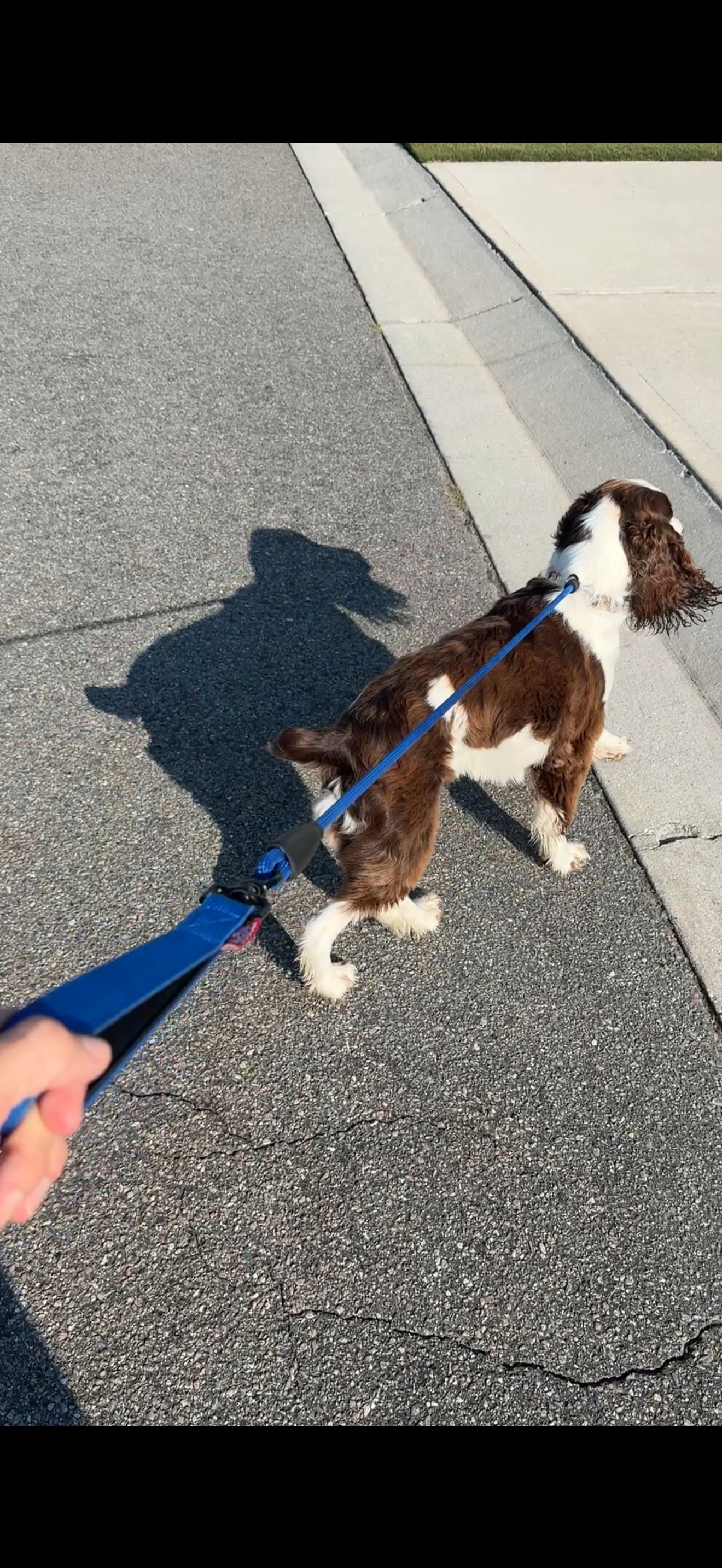
Your dog is usually not pulling toward other dogs because they are just being social. Most of the time, that pulling is rehearsal for fixation, entitlement, and over-arousal. The dog is learning, "I see something I want, I lean into the leash, and I get to go there." If that pattern keeps paying off, it often turns into frustration when access is blocked, and that is where bigger reactions start.
That is why I take this seriously early. A dog does not usually grow out of a behavior they practice all the time. They grow into it.
Why is pulling toward dogs a problem if my dog is friendly?
Because the issue is not friendliness, it is the pattern. A dog that drags you toward another dog is reacting to the environment and prioritizing that over you.
Every successful pull is self-reinforcing. The leash gets tight, the dog pushes through pressure, and then reaches the thing they wanted. That teaches the dog that pulling works. Later, when you finally decide they cannot greet this dog or that person, the same dog is much more likely to tip into frustration, barking, or lunging because the old pattern stopped paying.
This is also a relationship issue, not just a leash issue. Loose leash walking depends on engagement. If your dog does not see you as the source of guidance and value, the environment wins. That is why some owners feel like their dog walks fine one minute and then mentally disappears the second another dog shows up.
If that sounds familiar, I would also read How To Stop Leash Reactivity Before It Escalates. This pulling pattern is often where that road begins.
What should I do the moment my dog starts fixating?
Interrupt early, before the pull happens. If you wait until your dog is fully leaning, staring, and tuning you out, you waited too long.
I want owners watching body language, not waiting for an explosion. Ears forward, body stiffening, pace increasing, forehead wrinkling, tail going high, hard staring, these are the moments that matter. That is the fork in the road. Once your dog is mentally gone, you are no longer teaching much.
At the first clear signs of fixation, give a calm but firm no, then redirect. You can change direction on the walk, use light leash guidance, and the moment your dog disengages, mark that with good or yes and keep moving. Calm praise matters here. I do not want you making the moment bigger and more exciting.
The leash should guide, not drag. Pressure turns off when the dog is right. That timing is what helps the dog understand how to get back with you.
Just as important, stop allowing random greetings on leash. If your dog keeps learning that other dogs are available every time they spot one, you are feeding the exact pattern you are trying to remove. Neutrality is the goal. Your dog should be able to exist around dogs and people without needing to engage them.
That same idea matters with young dogs too. If you want help spotting where your foundation is thin, start by finding your training gap with the free quiz.
How do I actually train this before it becomes reactivity?
Start below your dog's hardest trigger level and build up. Do not begin with the biggest challenge on your street.
I like owners to think of distractions as a numbers game. Maybe a noise in the kitchen is a 10 out of 100. A car door shutting is a 30. A dog across the street is a 60. A squirrel sprinting across the road might be a 90. You are not going to fix the 90 first. You start where your dog can still think, still hear you, and still respond.
That means practicing simple obedience and engagement around lower-level distractions first. Ask for something clear that your dog already understands, like sit, then mark and reward success. Build the habit of seeing something, then checking in and working with you. Over time, you work up to harder environments instead of throwing the dog straight into them.
If your dog struggles with this even in easy settings, go back and rebuild the basics. Engagement, structure, and clear communication come before accountability. A lot of dogs pulling toward distractions are also dogs with too much freedom and too little clarity at home. That is why Why Dogs Need Structure At Home often connects so directly to what owners see on walks.
Your next step is simple. On your next structured walk, do not focus on passing dogs perfectly. Focus on catching the first signs of fixation early and redirecting before the leash goes tight. If your timing is off, or your dog is already deep into this pattern, you can always book a 1-on-1 consult and get a plan that fits the dog in front of you.