
How Do I Teach My Dog To Settle?
Published
Updated
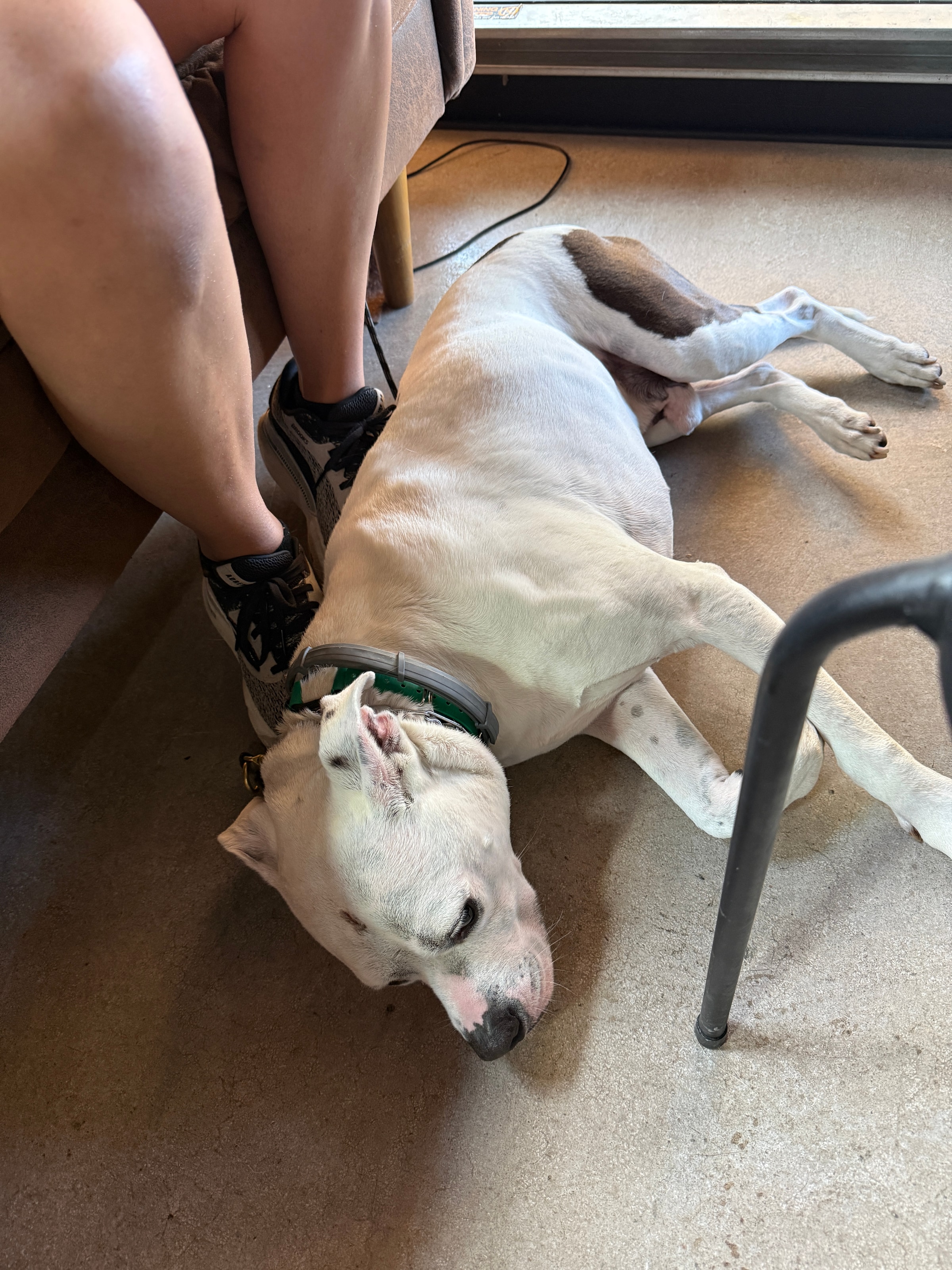
A lot of owners think a calm dog is something that just shows up with age. Sometimes it does, eventually. But most of the time, dogs settle better when we actually teach them how to do nothing. That is where place work helps. It gives your dog a clear job, a clear boundary, and a predictable way to relax in the house instead of roaming around inventing trouble.
If your dog paces, grabs random things, shadows every movement, or seems to create chaos the second you stop actively managing them, the answer usually is not more scolding. It is more clarity.
Why won’t my dog just relax in the house?
They often do not relax because they have never been taught what relaxing looks like. If all your dog has learned is follow, chase, grab, investigate, and react, then that is what they will keep offering.
This is where owners get stuck. They say they want the dog to just be a dog, but then the dog starts making dog decisions, chewing the wrong item, crowding the kitchen, hovering during meals, or bouncing from room to room looking for a job. A dog can only do what you have taught. If all you do is say no to the wrong choices, you end up in a constant fight without giving the dog a clear right answer. That is also why I talk so much about structure at home in articles like Why Dogs Need Structure At Home.
What does “settle” actually look like in training?
It looks like giving your dog a defined spot and teaching that spot means stay here, relax here, and wait here until released. I want four paws on the place bed, not a perfect sit or down.
That part matters. If you require a down every time, now you have more to correct and more ways for the dog to be wrong. Place is simpler. Your dog can stand, sit, turn around, or lie down. The job is just to stay on that surface. That clarity helps dogs relax faster because they are not guessing.
An elevated place bed is often easier at first because the boundary is obvious. The dog has to step up onto it and step down off it. That makes the picture cleaner than a flat mat, where dogs can start creeping off one inch at a time.
How do I start teaching this without confusing my dog?
Start small and make the early reps easy. Guide your dog onto the bed, mark the moment they are correct, reward on the bed, and release before you ask for too much.
I like short, clean repetitions. If your dog is new to this, do not jump straight to long duration. Do not get excited because they did it twice and then test whether you can walk into another room. That is where people lose progress. Build lots of successful repetitions first. Then add a few seconds. Then a little distance. Go slower than you think you need to.
If your dog is unsure of the surface, even getting close to it or putting front paws on it can be the first win. Some dogs also do better if the bed starts flat on the ground before you raise it back up. The point is not to force duration early. The point is to make the right answer easy to find.
If you want help figuring out where your dog is getting stuck, you can start by finding your training gap with the free quiz.
Why does my dog keep popping off the bed?
Usually because the dog is testing the boundary, or because the human got inconsistent. Both matter.
Dogs are opportunistic. If stepping off works, they will try it again. If you forget to release them and they wander off on their own, that still teaches something. Commands start becoming optional when nobody protects their meaning. Once your dog understands place, that is when follow through matters. Calmly guide them back. Do not turn it into a big emotional event, but do not shrug and let it slide either.
One detail that helps a lot is how you release. Instead of releasing your dog from across the room, walk back to them first. Then release. When you do that consistently, your approach becomes part of the pattern, and your dog is less likely to guess and self-release.
When should I use this in real life?
Use it during the exact parts of the day when your dog usually gets restless or pushy. Mealtimes, kids moving around, house chores, or busy evening hours are all good places to start.
This is not about banishing your dog. It is about giving them a job they can succeed at while life happens around them. You can also make the place bed valuable by offering a chew there and only there. Many dogs learn very quickly that if they carry the chew off the bed, it goes away, and if they stay on the bed, they get to enjoy it.
That is how calmness becomes practical. Not by hoping your dog grows out of chaos, but by showing them where calm lives. And if you want help building that into your home routine, you can book a 1-on-1 consult.